Team role: Lead Design, Level Design & Project manager.
Team size: 18
7 Artists, 4 Designers, 5 Programmers, 2 Audio designers.
Duration: 9 weeks
Engine: Unreal Engine 5
Platform: Playstation 5 & PC
Opponents in crime is an online party brawler where up to 4 players compete to see who can steal the most items from a museum.The game was my pitch for Game project 2 at Playgroundsquad.
Trailer

Team Role
Lead Design - Level Design - Project Manager
- Since this was my initial idea I became the head of the project. I was in all of the meetings and mostly handled communication in the team.- I made sure to have weekly sprints and to do lists so the team knew what to work on and what to prioritize.- I frequently discussed all design within the game and made sure that our ambitions were achievable, my main contribution on the overall design was making sure ideas tied together and were modular
enough to be expanded upon.- I had checkups to make sure we were on track and frequently gave feedback and guidance to all different teams so we kept the vision clear.- I also created two of the levels within the game that focused more on 2 player interactions and featured a tighter, more straightforward layout.- Since I was lead on the project I made all the presentations for our beta and gold showcases. Using simple google slides and being the main speaker on stage.- I even ended up creating the trailer for the game. Writing the storyboard for it, a voice script, recording gameplay & editing it together in premiere pro. The comic book visuals were provided by Josephine Svärd
Gameplay Philosophy & Mechanics
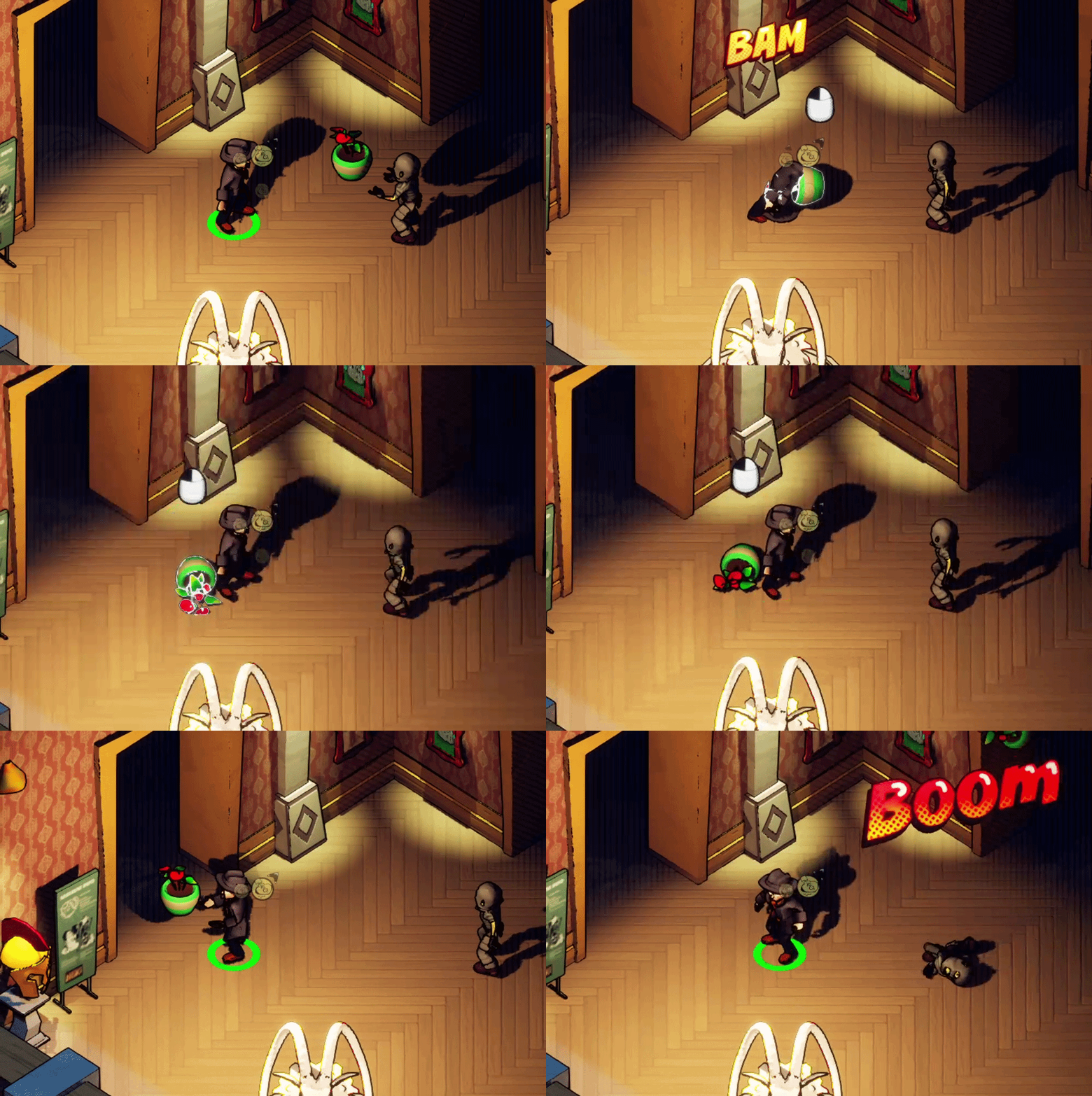
Opponents in crime at the core is a party brawler, but instead of the goal being to kill your enemies it’s looting more items than them.In this genre of games the core appeal is punching the lights out of your friends. So I came to the conclusion that we needed to directly tie the act of stealing and brawling together.
Weaponized Loot
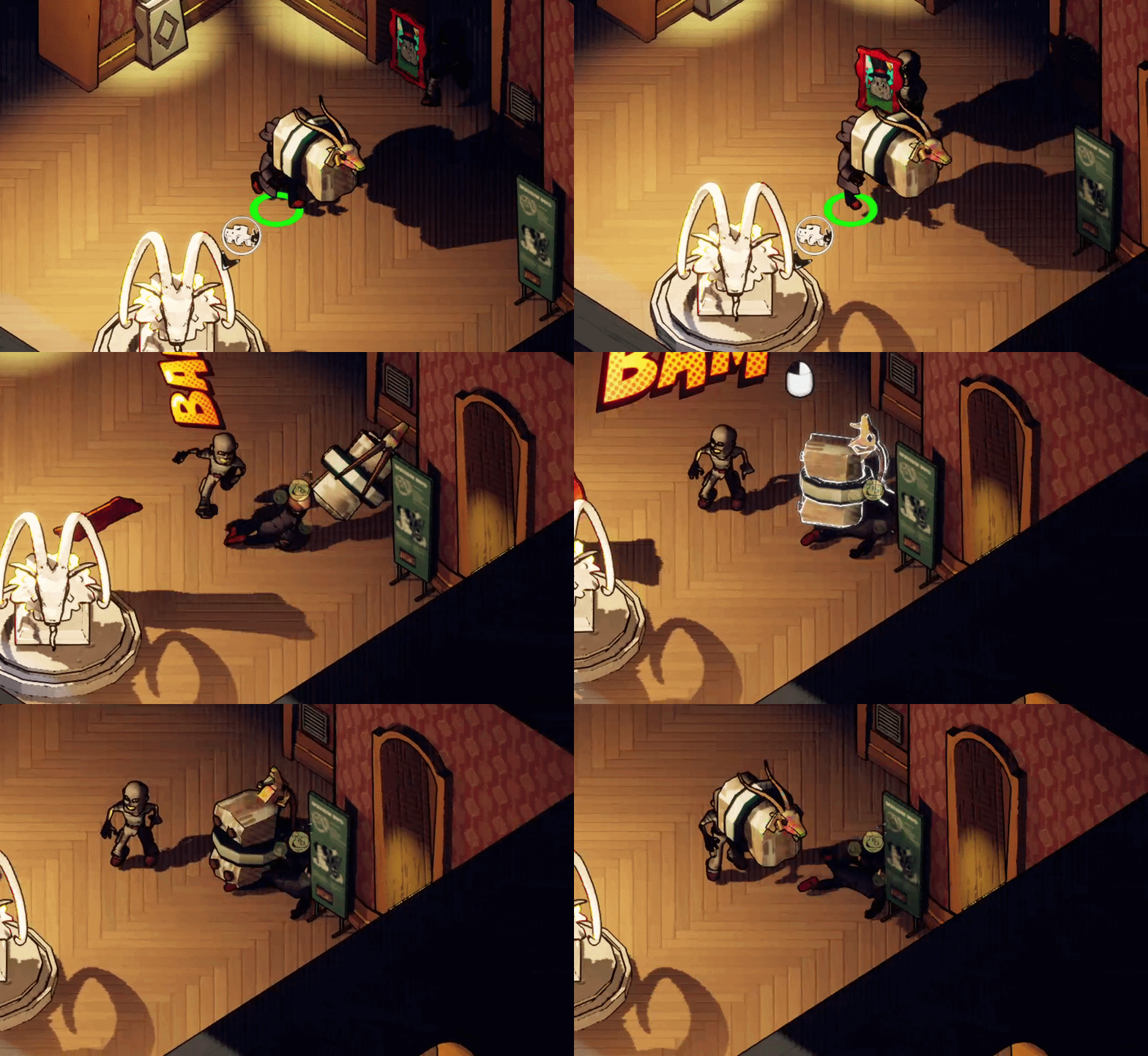
To do this we made all of the items the player needs to steal into potential projectiles. So if you are carrying something you not only become a target for other players to engage with you but you also gain the ability of ranged offence.
Target Art
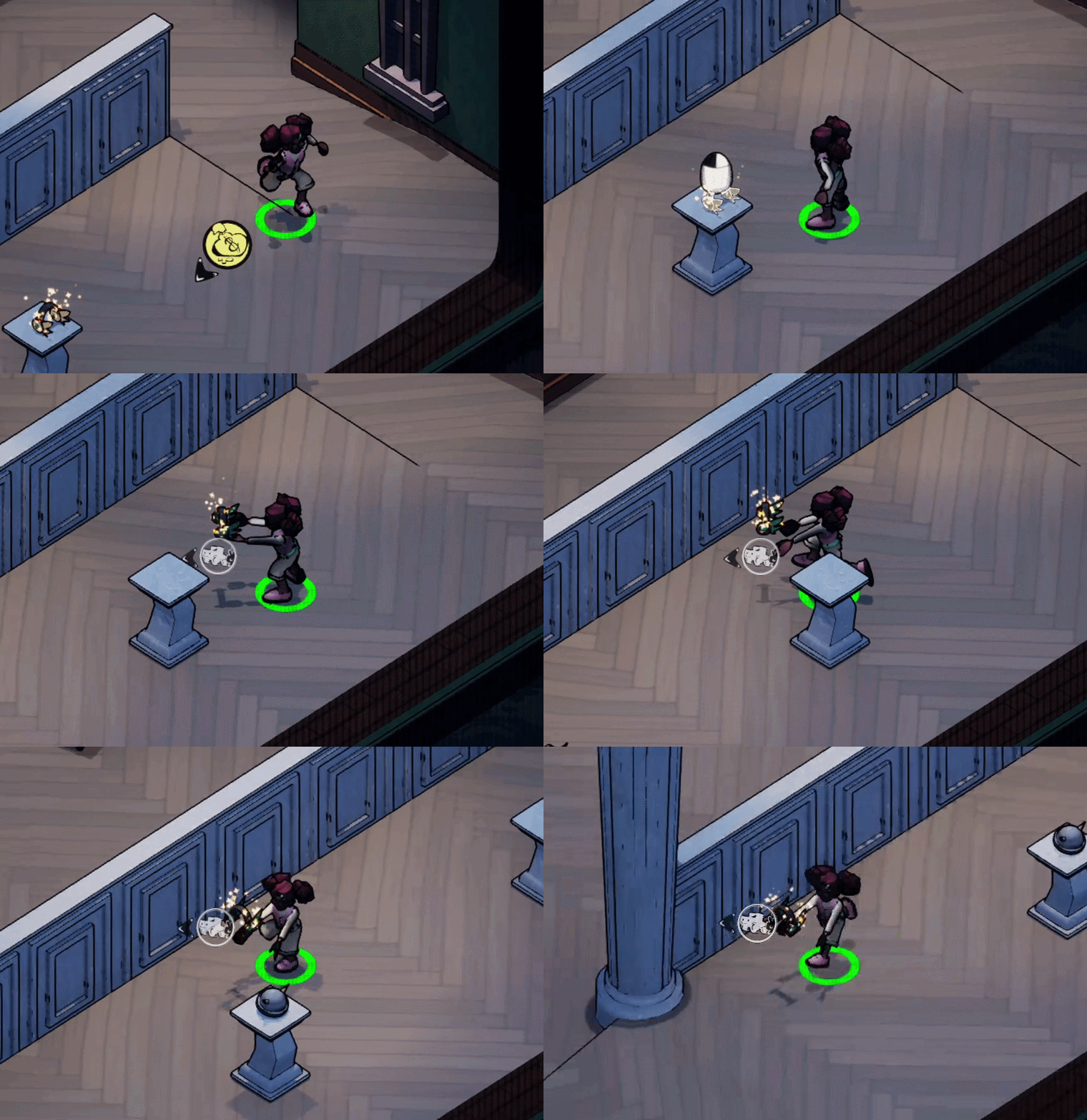
To prevent the players from only focusing on each other, each player gets 3 items each that have boosted value.These items do not overlap between players, so everyone has unique targets regardless if they are on the same team or not.This gave each player something special to pursue for themselves, and something highly valuable to defend.
Traps
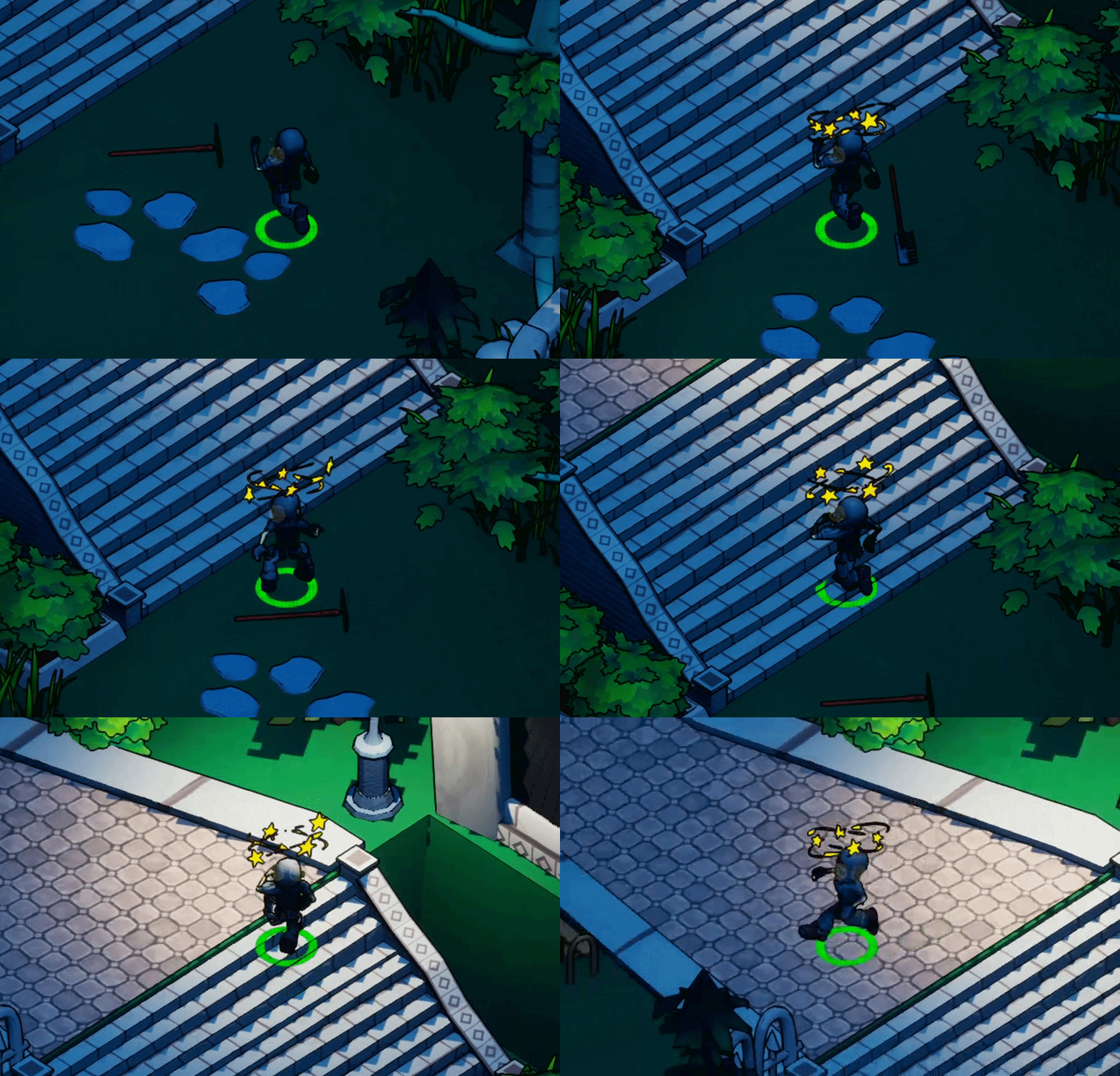
We wanted to spice up the gameplay loop a little however and include traps in the game that gave the players a more tactical edge over their opponents.The traps had a strong focus on changing up the players movement in different ways. Through swaying controls less friction and inverted controls.
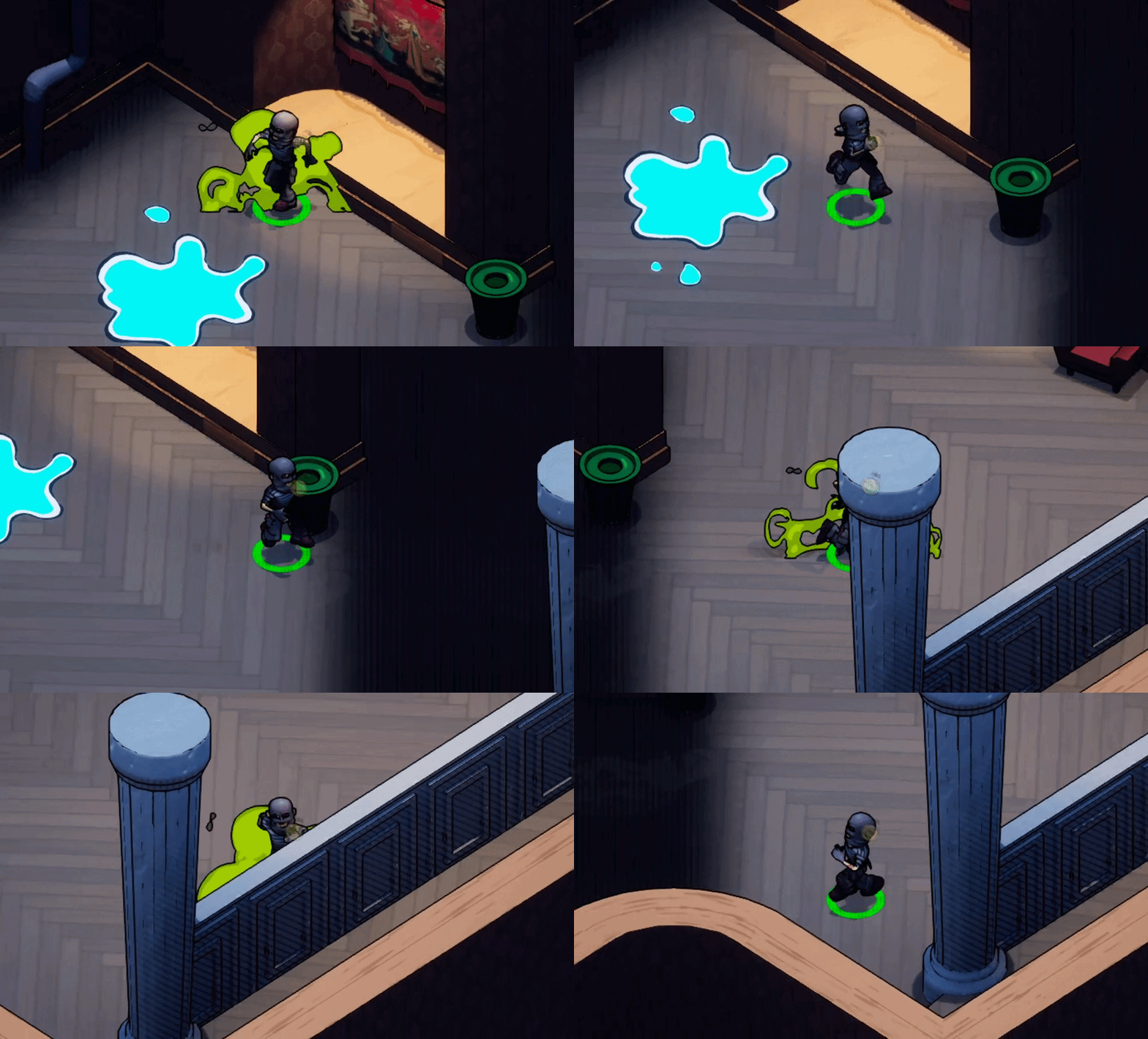
Example of frictionless movement and inverted controls stacking on eachother.
One major benefit of these traps was that players who were prone to getting bullied or tossed around a lot could employ tactics to overcome brute force.The effect of the traps also stack on top of each other.
This decision was mostly formed out of the comedic aspect of having multiple debuffs at once while still trying to move around.
Universal Rules
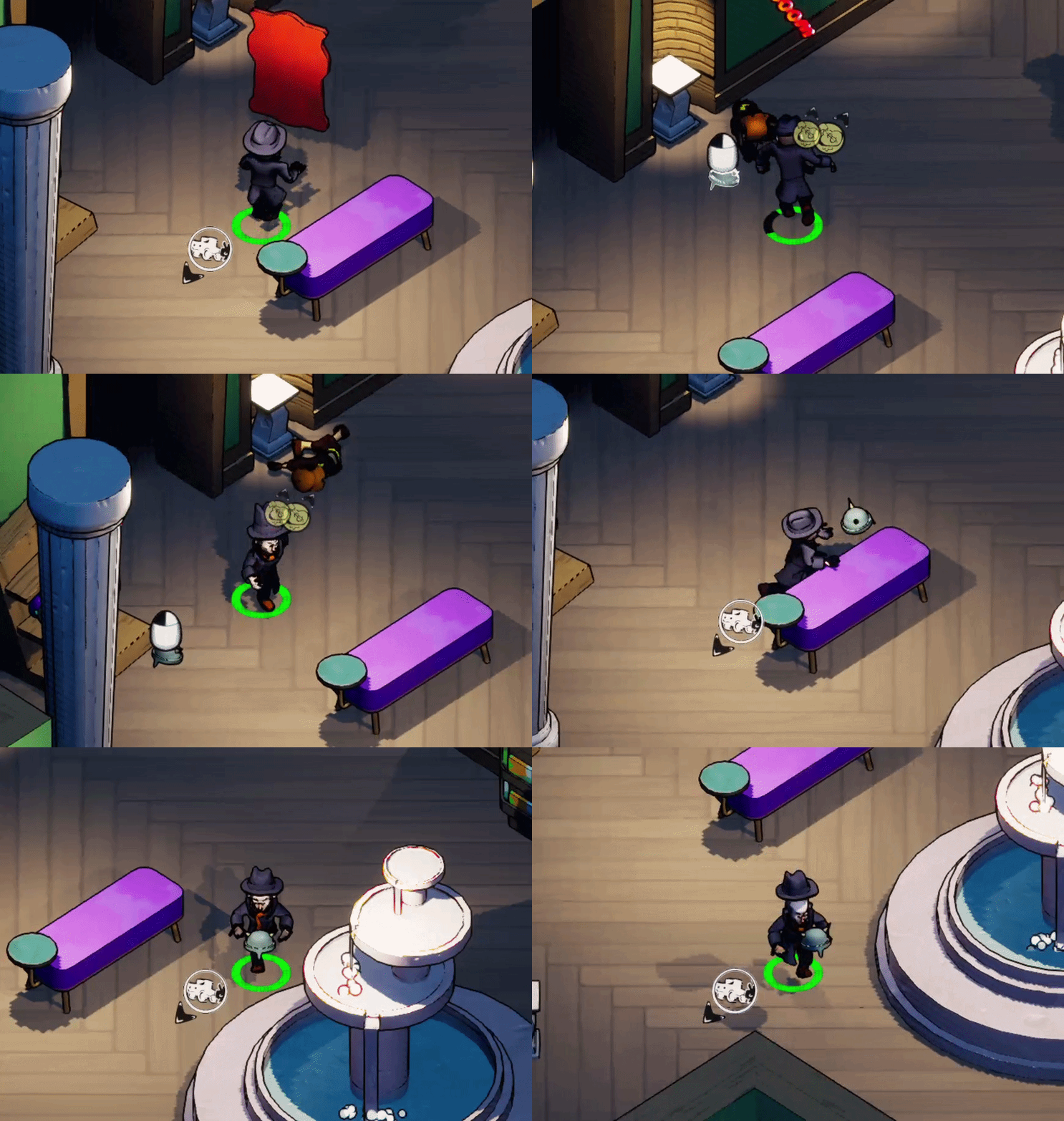
An important rule during development was making sure that everything in the game shared a similar gameplay loop. Interacting with all items should function in a similar way. The act of picking items up and throwing them is universal no matter if it is an artwork or trap.I thought it was integral that all the core mechanics worked on the same systems so that the learning curve would smoothen out. Mastery of the game should come from a familiarity with tactics, not from knowing all the controls better.
Alarm System
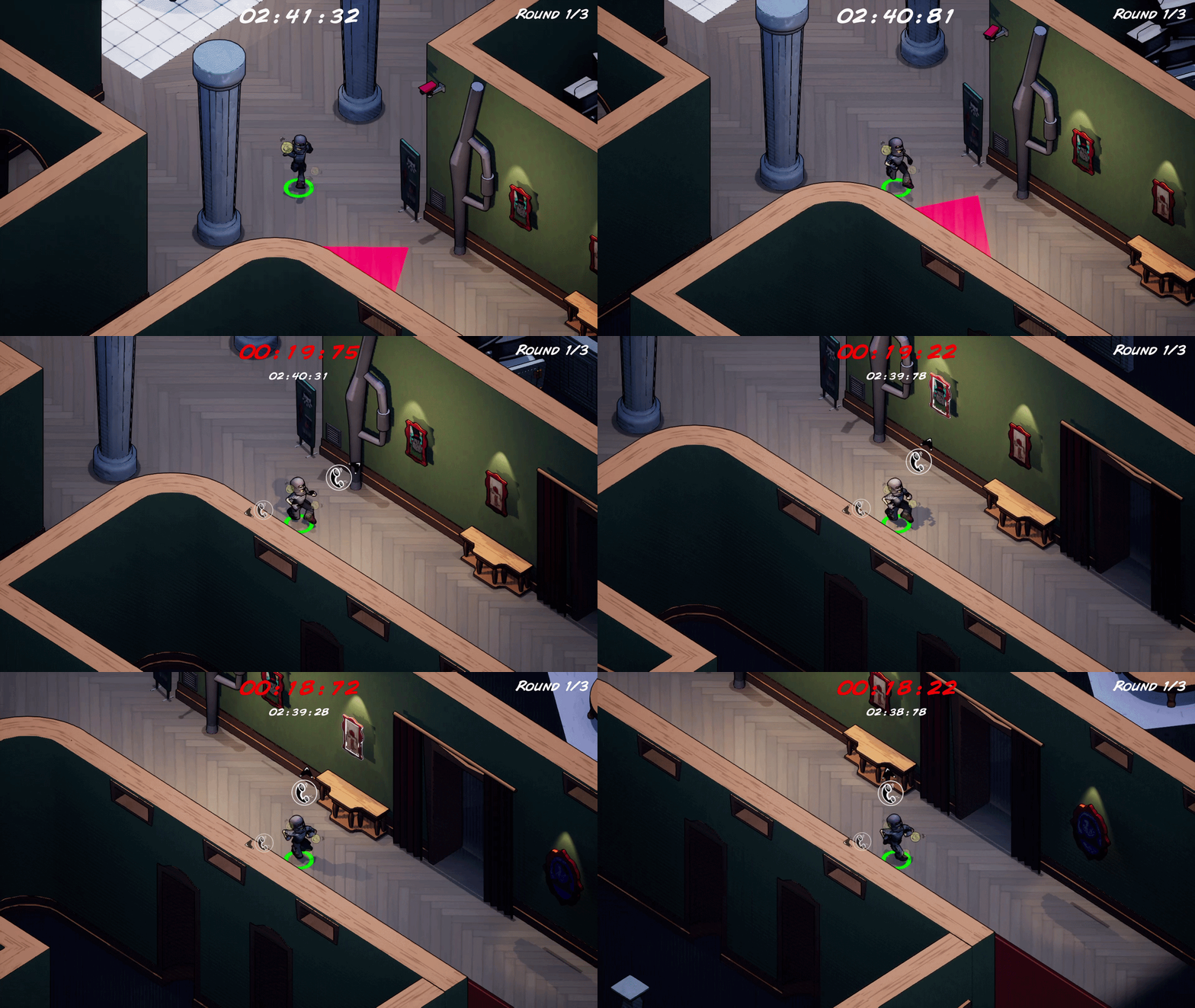
Another mechanic I think is interesting is the security systems. It made sense for a museum to have countermeasures for the robbers, so alarms were set in place. These take the shape of security cameras and a roaming guard.If the player is spotted by either of these they will have 20 seconds to turn off the alarm before the round ends prematurely. This gives both the players a shared goal as they most likely do not want the round to end.
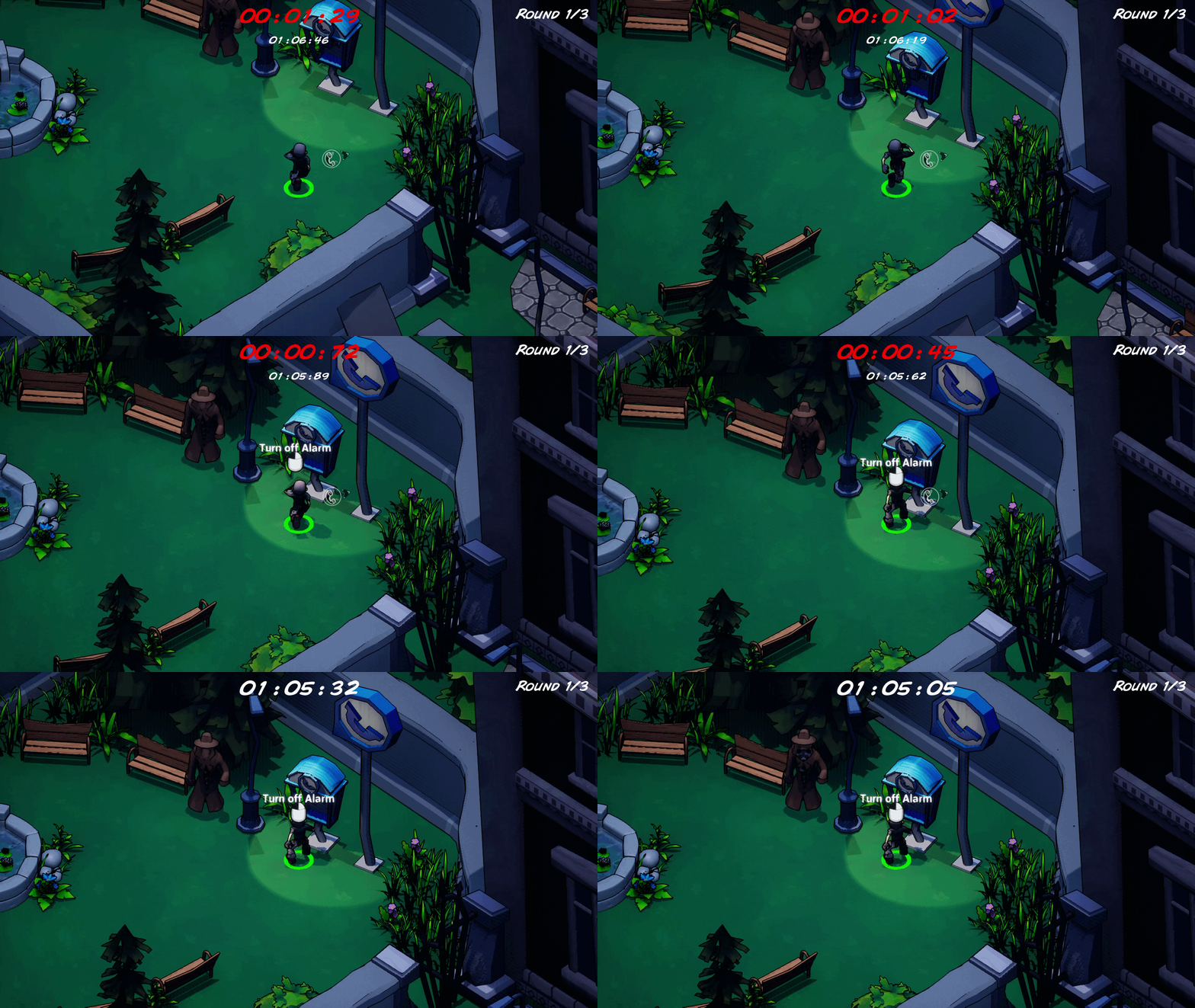
Player turning of the alarm just in time.
But on the off chance that a player is in the lead they might wish to prematurely end the round to not risk losing the lead. To counter players intentionally trying to skip the rounds over and over again they receive a score reduction every time they trigger the alarm.The score reduction could also be exploited by players, since intentionally shoving their opponents into the security system will worsen their final score.There are always two spots on every level where the player can turn of the alarm, one inside the museum and one outside.
We did not increase the amount since we wanted the players to go out of their way to turn of the alarm.
Fast Travel
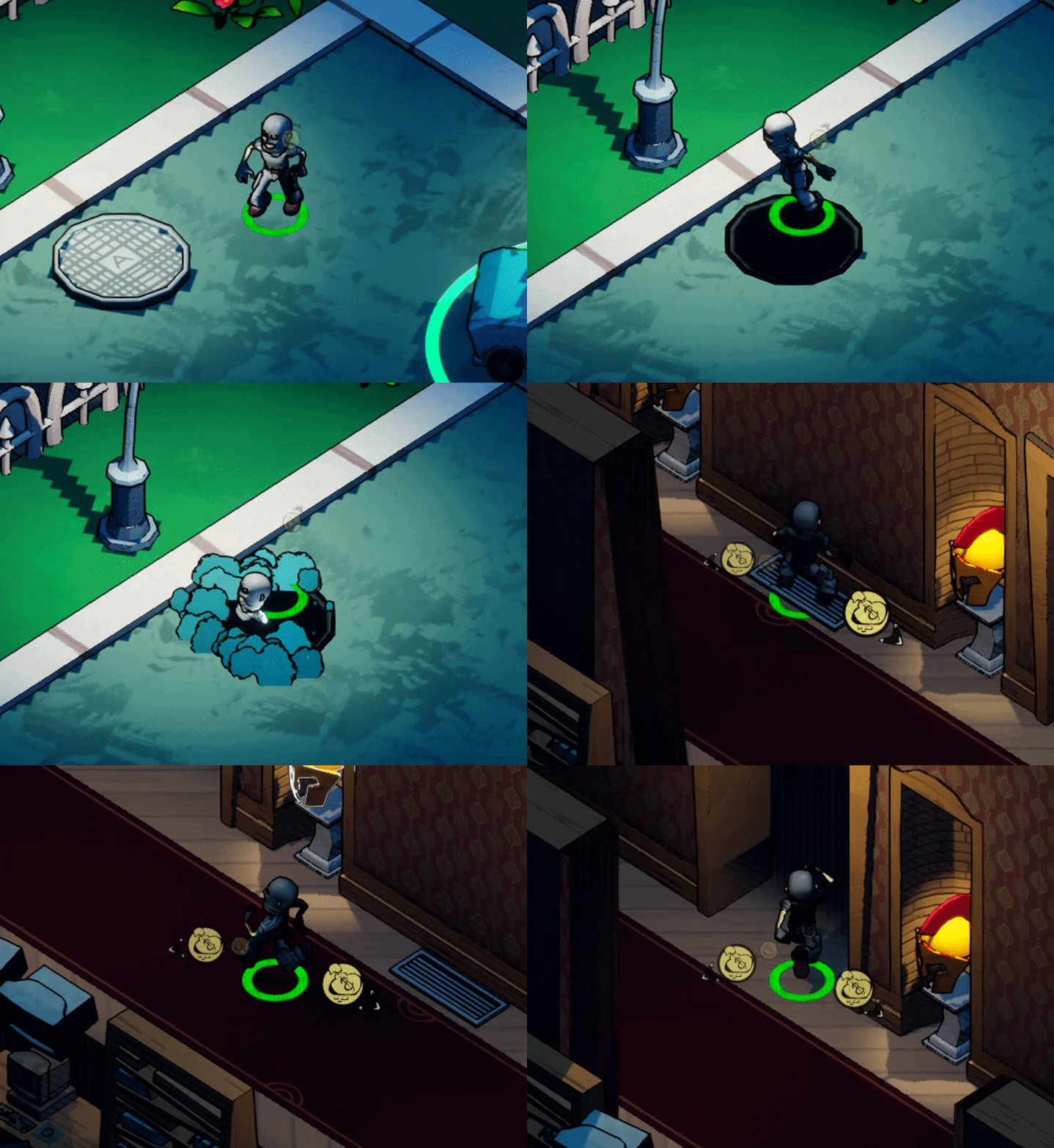
"Saving time in exchange for knowledge."
Was the thought behind this mecanic.
We also noticed that a lot of players would not venture deep into the museum despite the better loot being there.To make it easier for players to get deep in without having to run all the way we added fast travel points in the form of a well that can be found outside the museum.To balance this out we decided that players cannot travel with an item in their hands. They also do not familiarize themselves with the layout as much by doing this.There is only one well per map so players have to explore the exterior layout before they can travel.We also decided that the well should only lead into the museum not out. The idea behind this decision was for players to use the wells to get into the action, not out.
Challenges
The biggest challenge of this project was discouraging camping and giving the players the ability to topple bullies. The game incentivizes stealing from the other players and using clever/scummy tactics to win. But we also needed to give the players an option to counter this.
A good way of doing this was giving the players different goals meaning that you are rewarded for going after specific artworks. And by making all loot into a projectile anyone who is carrying a valuable is also carrying a weapon making flanks and camping harder.Another challenge of the project was working with external people remotely.
We were working with students from Högskolan Dalarna who were making music and sound effects for the game.
I have no musical background so giving feedback for music was very difficult. To counter this I frequently discussed the tone and mood of the game with them, giving examples and frequent checkups.
It was a new experience for me and you had to get used to a completely different workflow when it came to giving feedback and trusting the process.
Takeaways
The biggest takeaway for this project was how to handle team management and keep people engaged in the project.
One thing that really helped with inclusion and engagement was when I introduced more collaborative thought exercises and activities that promoted creativity and wacky ideas.
Productivity increased and we met our base deliverables thanks to it.
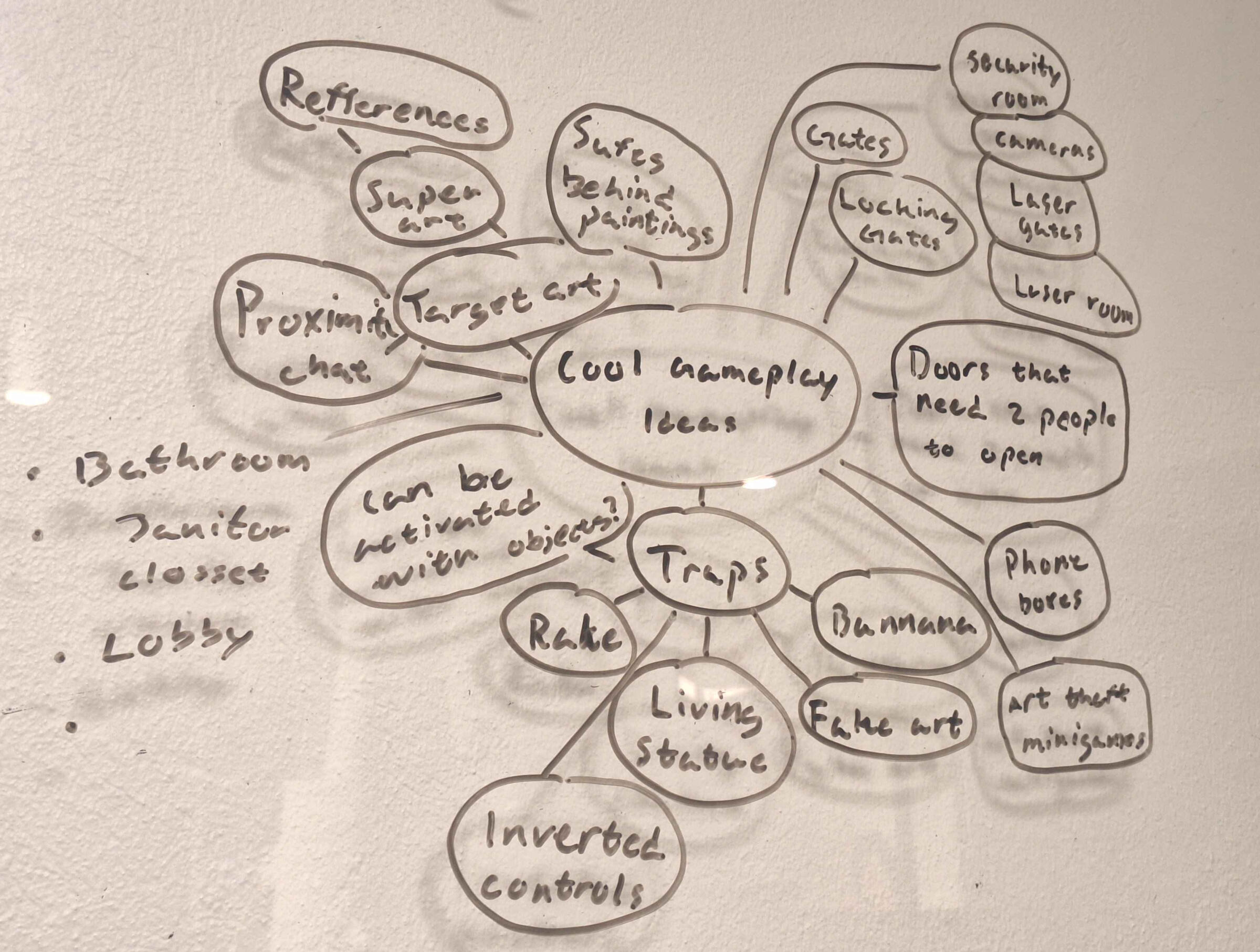
From our first collaborative exercise where we threw fun ideas at the wall, many ended up sticking.
Another big point that I take with me is that when working on online games it is good to get feedback and playtesting from a lot of different people rather than having the same people playing for longer periods. On a project like this you want to observe as many different playstyles as possible so you can take into account all the different mindsets, this way you can try to tailor the experience to facilitate or discourage specific strategies.